
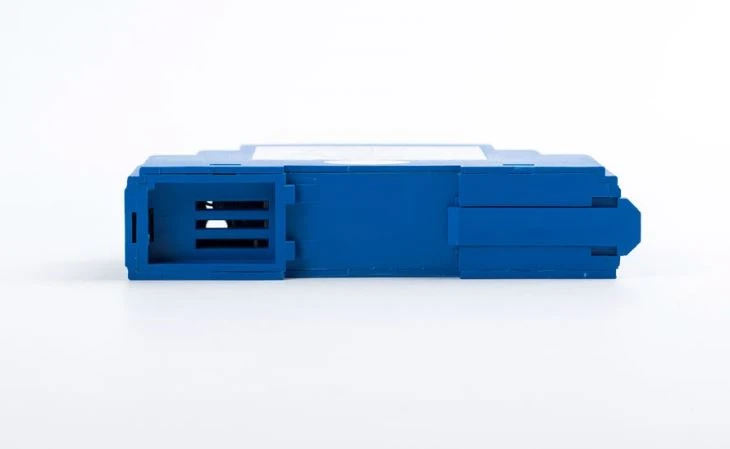
DC Current Transducers for Industrial Monitoring
Explore DC current transducers for industrial measurement and monitoring systems. Compare available products using documented input range, current direction, output signal, power supply, isolation, accuracy, response, mounting and connection requirements, then review the listed family for verified model details rather than treating raw Hall sensors or other current-sensing architectures as equivalents.
Buyer Guidance
Selection should begin with the documented DC input range and direction, required output signal, power supply, isolation method, accuracy and response requirements, mounting, terminals and environmental conditions. A finished current transducer should not be treated as equivalent to a raw Hall sensor, current transformer, Rogowski coil or current shunt.
Relevant Resources
- Current Transformer Selection Guide only as an adjacent comparison resource with explicit technology differences.
Frequently Asked Questions
What information distinguishes a finished DC current transducer from a raw Hall sensor?
A finished current transducer should not be treated as equivalent to a raw Hall sensor, current transformer, Rogowski coil or current shunt.
How do input direction, output signal and supply affect selection?
Selection should begin with the documented DC input range and direction, required output signal, power supply, isolation method, accuracy and response requirements, mounting, terminals and environmental conditions.
What should an RFQ include?
Provide DC range and direction, output, supply, isolation requirement, accuracy, response, mounting, terminals, quantity and application.