
DC Power Protection · Comparison
How to Choose a DC Circuit Breaker: MCB vs MCCB
Choosing between a DC miniature circuit breaker (MCB) and a DC molded case circuit breaker (MCCB) is not as simple as assigning MCBs to “small currents” and MCCBs to “large currents.”
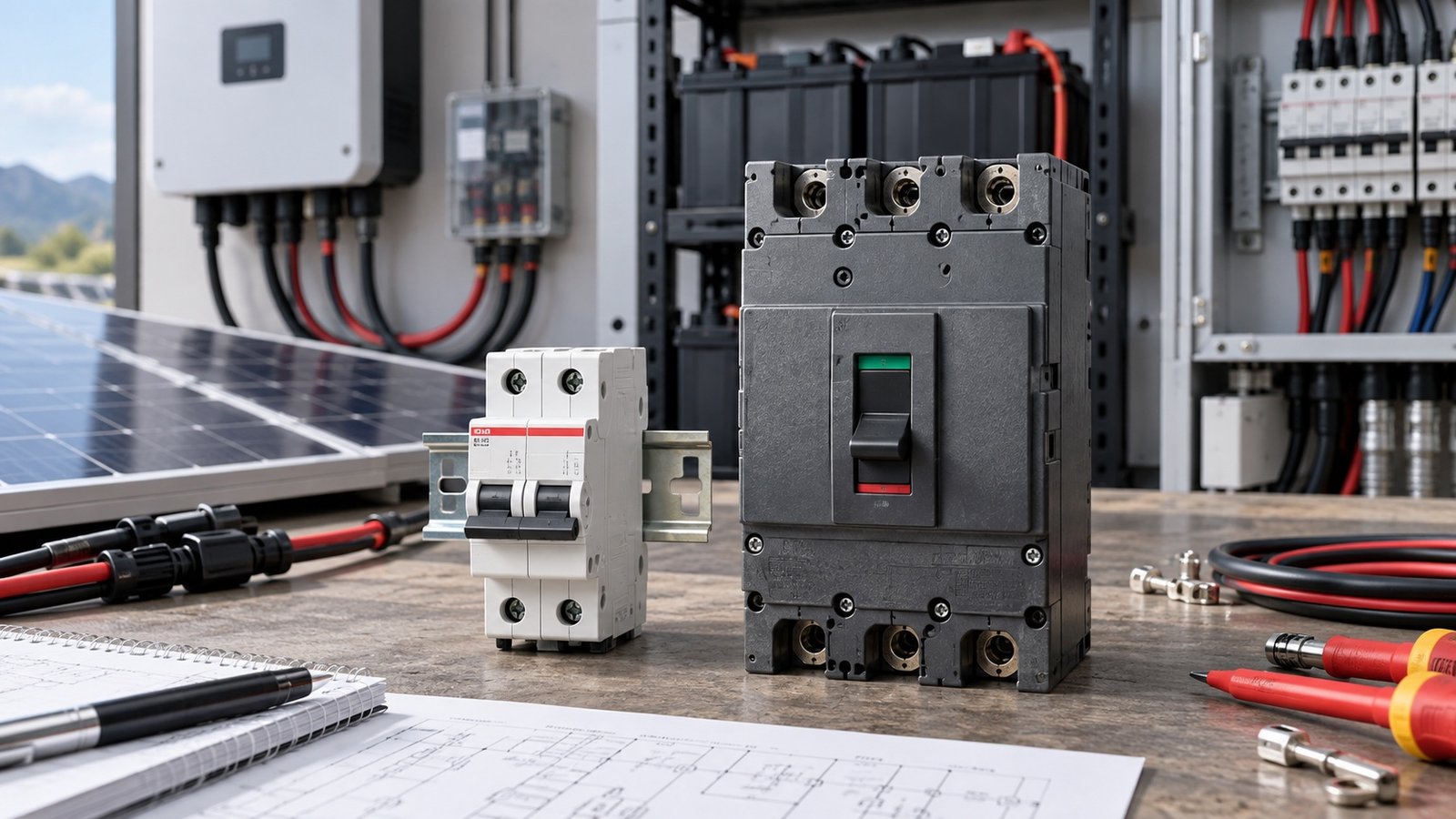
That shortcut can be misleading.
Current RITOKS DC Power Protection product families already show why. Published DIN-rail DC MCBs include models ranging from 6–63A as well as a high-current 63–250A family, while the current molded-case DC breaker family includes 125A and 250A frames.
In other words, current range alone does not reliably separate an MCB from an MCCB.
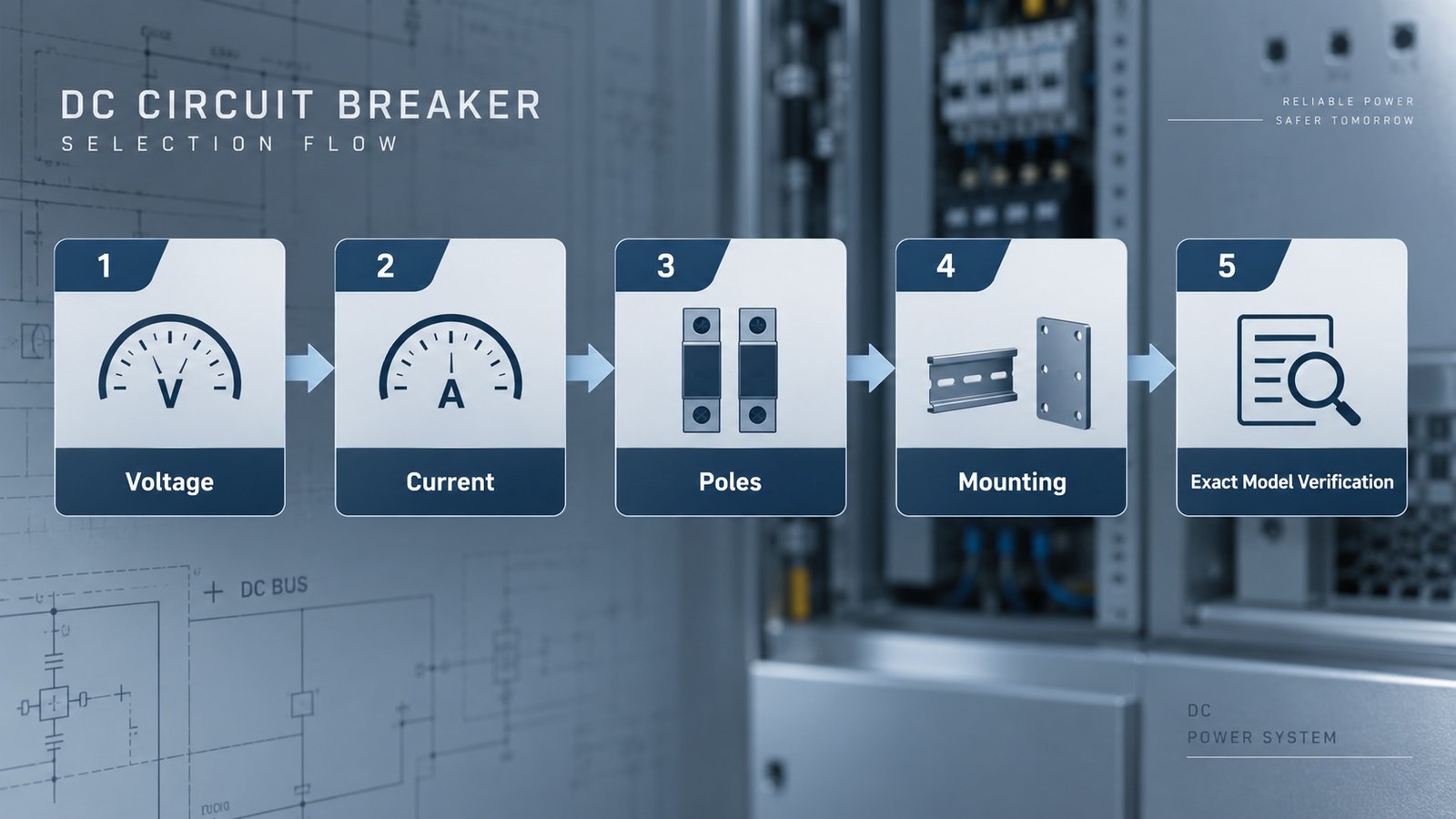
A more practical DC circuit breaker selection process considers:
- DC system voltage
- operating current
- required number of poles
- mounting format
- available product configuration
- application context
- the confirmed data for the exact breaker model
This guide explains how to compare DC MCB and MCCB options without relying on a universal current threshold.
In This Guide
- Quick Answer: MCB or MCCB?
- What Is a DC MCB?
- What Is a DC MCCB?
- Why Current Alone Is Not Enough
- A Practical Selection Process
- Common Selection Mistakes
- Frequently Asked Questions
Quick Answer: MCB or MCCB?
The table below summarizes the current RITOKS product-family positioning.
| Selection Factor | DC MCB | DC MCCB |
|---|---|---|
| Current RITOKS mounting format | 35mm DIN rail | Panel / fixed mounting |
| Current RITOKS pole options | 1P / 2P depending on model | 2P in the current published family |
| Published current examples | 6–63A and 63–250A families | 125A / 250A frames |
| Published voltage examples | 12–125V, 500V, and 500–1000V DC families | 500V / 1000V variants |
| Main selection approach | Match exact electrical and installation requirements | Match exact electrical and installation requirements |
| Can current alone determine the choice? | No | No |
This is a product-family comparison, not a universal engineering rule.
For available commercial options, see the RITOKS DC Circuit Breakers category.
What Is a DC MCB?
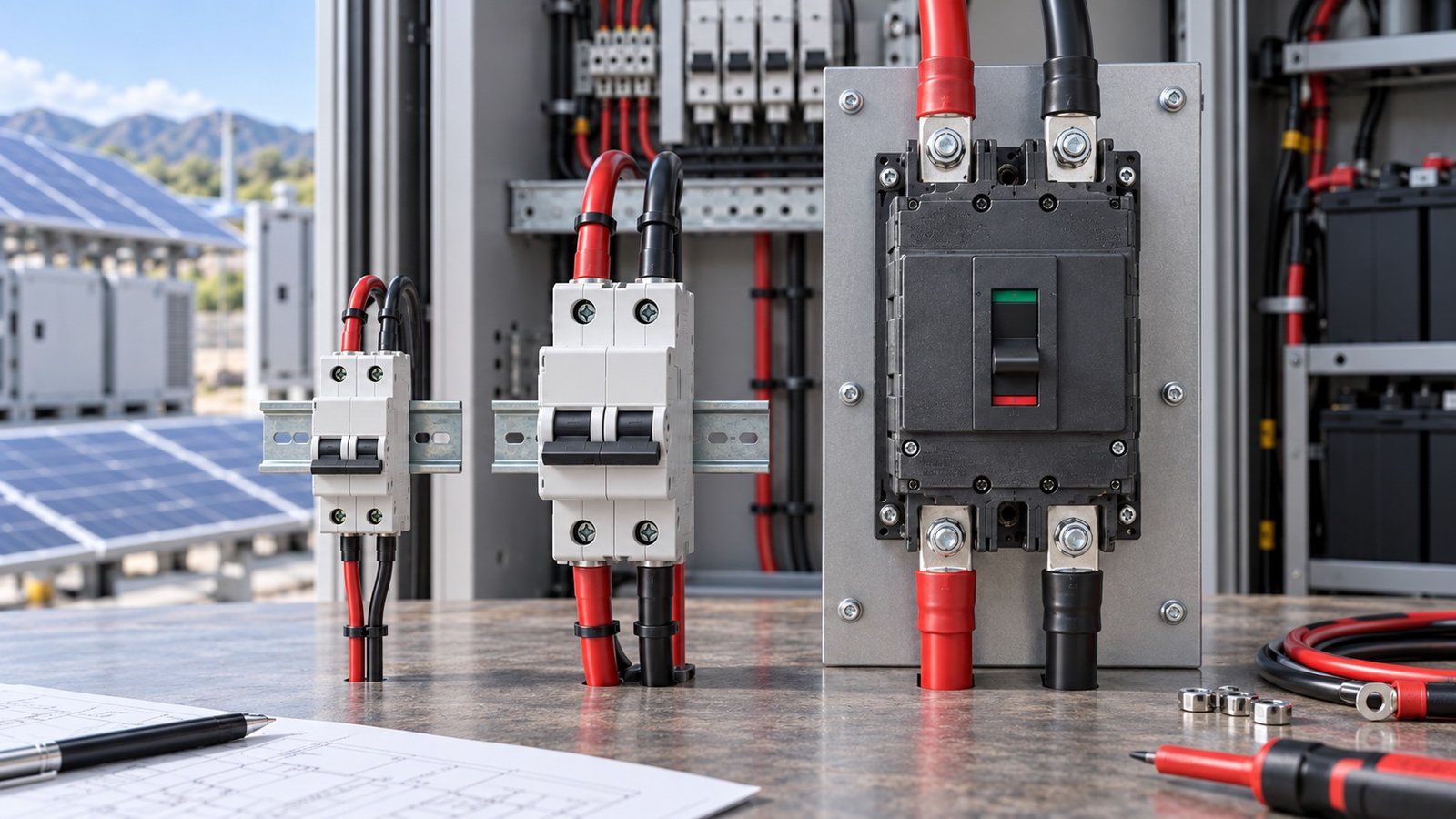
A DC miniature circuit breaker (MCB) is a compact circuit protection device commonly supplied in DIN-rail configurations.
Current RITOKS DC MCB products include several different families rather than one single rating range.
For example:
- RTS-DC63-1000 — 2P, 500–1000V DC, 6–63A, 35mm DIN rail
- RTS-DC63-500 — 2P, 500V DC, 6–63A, 35mm DIN rail
- RTS-DC250-125 — 1P/2P, 12–125V DC, 63–250A, 35mm DIN rail
These examples demonstrate an important selection principle:
“MCB” describes a product construction and family format; it should not be reduced to a single current limit.
The available model still needs to be checked against the actual DC system.
For broader options, see DC Miniature Circuit Breakers.
What Is a DC MCCB?
A DC molded case circuit breaker (MCCB) uses a molded-case construction and is typically installed differently from a DIN-rail miniature breaker.
The currently published RITOKS MCCB family is:
Confirmed published characteristics include:
- 2P configuration
- 500V / 1000V DC variants
- 125A / 250A frames
- panel / fixed mounting
This gives it a different installation format from the current RITOKS DIN-rail MCB families.
However, the current range overlaps with the RTS-DC250-125 MCB family. That is why simply asking:
“Is the current above a certain value?”
is not enough to decide between MCB and MCCB.
For the current molded-case family, see DC Molded Case Circuit Breakers.
MCB vs MCCB: Why Current Alone Is Not Enough
A common selection shortcut is to assume that MCBs are always used below one current value and MCCBs above it.
The current RITOKS product range shows why that approach is unreliable.
The RTS-DC250-125 MCB is a 35mm DIN-rail family with published current options from 63A to 250A.
The RTS-DCM250-1000 MCCB includes 125A and 250A frames.
Those ranges overlap.
Therefore:
A 125A or 250A requirement does not automatically tell you whether the correct product format is an MCB or MCCB.
Instead, the decision needs to consider the complete system and installation requirements.
1. Start With the DC System Voltage
The first question should be:
What DC voltage must the breaker handle?
Current RITOKS MCB families cover very different voltage contexts.
For example:
- one family is published for 12–125V DC
- another for 500V DC
- another for 500–1000V DC
The current MCCB family also includes 500V and 1000V DC variants.
This means two breakers with similar current ratings may still belong to very different system-voltage applications.
Do not choose a breaker from current rating alone and then assume the voltage requirement will also be satisfied.
The exact model and configuration must be checked.
2. Confirm the Required Operating Current
Current remains an important selection factor, but it is only one part of the decision.
For example, current RITOKS MCB families include:
- 6–63A options
- 63–250A options
while the current MCCB family includes:
- 125A frame
- 250A frame
The overlap means the current value narrows the candidate products but does not by itself determine the breaker construction.
The correct selection should remain tied to the exact model documentation.
3. Check the Number of Poles
Pole configuration can also affect which product family is appropriate.
Current published RITOKS examples include:
- 2P MCB families
- a 1P/2P low-voltage high-current MCB family
- a 2P MCCB family
The required number of poles should therefore be defined before selecting a model.
Do not assume that every MCB or MCCB family is offered in the same pole configuration.
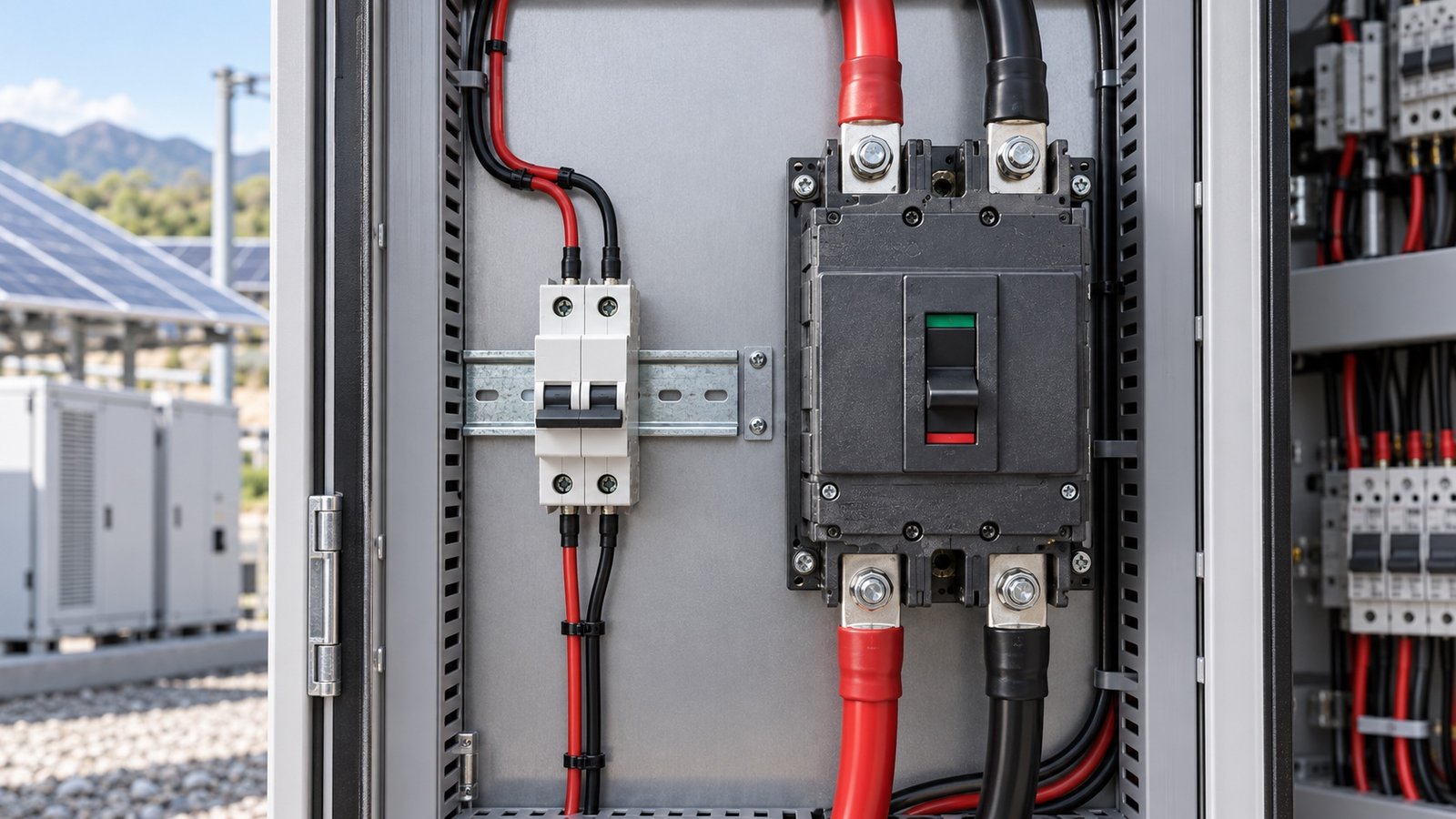
4. Consider the Mounting Format
This is one of the clearest practical differences in the current RITOKS range.
Current DC MCB Families
The published MCB examples use:
- 35mm DIN-rail mounting
This format is commonly associated with compact modular installation inside suitable electrical enclosures.
Current DC MCCB Family
The published MCCB example uses:
- panel / fixed mounting
That creates a fundamentally different installation format.
So when a project already specifies:
- DIN-rail modular equipment
- panel-mounted molded-case equipment
- a particular enclosure layout
the physical mounting requirement may immediately narrow the choice.
This is often more useful than trying to identify a universal current dividing line.
5. Compare the Exact Product Configuration
“MCB” and “MCCB” are family descriptions.
They do not tell you every characteristic of a specific breaker.
Before ordering, confirm the exact model and relevant published configuration.
At minimum, the sourcing review should identify:
- DC voltage
- current requirement
- pole configuration
- mounting method
- exact product model
- application context
- any other required documented characteristics
Where a parameter is not confirmed in the model documentation, it should not be assumed from another breaker in the same general category.
DC MCB vs MCCB at a Glance
| Question | MCB Consideration | MCCB Consideration |
|---|---|---|
| Do I need DIN-rail installation? | Current RITOKS MCB families use 35mm DIN rail | Current published MCCB uses panel/fixed mounting |
| Do I need 1P? | Available on the current RTS-DC250-125 family | Current published MCCB family is 2P |
| Is the current above 63A? | A current RITOKS MCB family extends to 250A | Current MCCB family also includes 125A/250A |
| Do I need 500V or 1000V DC? | Available in selected MCB families | Available in current MCCB family |
| Can I select purely by current? | No | No |
| Should I verify the exact model? | Yes | Yes |
The important takeaway is not that one breaker type is “better.”
The important question is:
Which construction and exact model fit the electrical and installation requirements of this DC system?
Example 1: Compact DIN-Rail DC Protection
Suppose a project requires:
- a DIN-rail breaker
- a confirmed DC voltage
- a current requirement within the available model range
- a supported pole configuration
In that case, the current DC MCB families may be the first product group to investigate because the published RITOKS MCB examples use 35mm DIN rail.
For example, the RTS-DC63-1000 family provides:
- 2P
- 500–1000V DC
- 6–63A
- 35mm DIN rail
This does not mean it is automatically suitable for every system matching those headline values. The exact application and product documentation still need to be confirmed.
Example 2: High-Current DIN-Rail Requirement
A higher current requirement does not automatically mean MCCB.
The RTS-DC250-125 is a published DC MCB family with:
- 1P / 2P
- 12–125V DC
- 63–250A
- 35mm DIN rail
This is an important example because it directly disproves the idea that every high-current DC application must automatically move to a molded-case breaker.
The system voltage and installation format still matter.
Example 3: Panel-Mounted Molded-Case Requirement
If the project calls for a molded-case breaker in a panel/fixed-mounted format, the RTS-DCM250-1000 family becomes a relevant candidate.
Its published configuration includes:
- 2P
- 500V / 1000V variants
- 125A / 250A frames
- panel / fixed mounting
Again, the final decision should be based on the exact selected variant and confirmed product data rather than the family name alone.

A Practical DC Circuit Breaker Selection Process
A more defensible selection workflow looks like this:
Step 1 — Define the DC Voltage
Confirm the actual system voltage before comparing models.
Step 2 — Define the Operating Current
Use the required current to narrow the available product families.
Step 3 — Define the Pole Requirement
Determine whether the circuit requires a configuration currently available from the selected family.
Step 4 — Define the Mounting Format
Ask whether the installation is designed around:
- 35mm DIN rail
- panel / fixed mounting
Step 5 — Compare Candidate Models
Only compare products whose published voltage, current, pole and mounting configurations match the project requirements.
Step 6 — Verify the Exact Documentation
Do not transfer one model’s electrical characteristics, accessories or performance claims to another model.
Common MCB vs MCCB Selection Mistakes
Using a Fixed Current Threshold
This is the most important mistake to avoid.
The current RITOKS product range already contains MCB and MCCB products with overlapping current values.
Ignoring DC Voltage
A breaker that fits the current requirement may still belong to the wrong voltage family.
Ignoring Mounting Format
A DIN-rail MCB and a panel-mounted MCCB require different physical installation approaches.
Assuming Every Family Has the Same Poles
Current configurations differ by product family.
Assuming Unconfirmed Breaking Capacity
Breaking-capacity data must remain tied to the exact confirmed model or variant. It should not be generalized across MCB and MCCB families.
Assuming Trip Functions or Accessories
Do not assume adjustable trips, trip curves, shunt-trip functions or accessories unless they are explicitly confirmed for the exact breaker being sourced.
Selecting From Appearance Alone
The physical appearance of a breaker does not establish its suitability for a particular DC circuit.
Where MCB and MCCB Fit Within DC Protection
Circuit breakers are only one part of a wider DC protection system.
Depending on the system design, other functions may include:
- fuse protection
- manual isolation
- surge protection
For an overview of how these functions differ, see:
DC Protection Devices Explained: Circuit Breakers, Fuses, Isolators & SPDs
That guide explains why a breaker, fuse, isolator and SPD should not automatically be treated as interchangeable devices.
Frequently Asked Questions
Is an MCCB Always Used for Higher Current Than an MCB?
No. The current RITOKS range includes a DIN-rail DC MCB family rated from 63A to 250A and a DC MCCB family with 125A and 250A frames. Their current ranges overlap, so current alone does not define the choice.
What Is the Clearest Difference Between the Current RITOKS MCB and MCCB Families?
The clearest confirmed difference is mounting format. Current RITOKS MCB examples use 35mm DIN rail, while the published MCCB family uses panel/fixed mounting.
Can I Choose Between MCB and MCCB Based Only on Voltage?
No. Voltage is one selection factor. Current, poles, mounting format, exact model configuration and application requirements should also be checked.
Does a 250A DC Circuit Automatically Require an MCCB?
Not automatically. RITOKS currently publishes a DC MCB family that extends to 250A as well as an MCCB family with a 250A frame. The correct choice depends on the complete electrical and installation requirements.
Are All DC MCBs Suitable for the Same Applications?
No. Current published MCB families have different voltage, current and pole configurations. Suitability should be confirmed for the exact model.
Should Breaking Capacity Be Compared When Selecting a Breaker?
It can be an important product characteristic, but the value must come from confirmed documentation for the exact model or variant. Do not apply one product’s value to an entire MCB or MCCB family.
Need Help Choosing a DC MCB or MCCB?
RITOKS offers both DC miniature circuit breaker and DC molded case circuit breaker product families.
For a sourcing inquiry, provide:
- DC system voltage
- operating current
- required poles
- preferred mounting format
- application
- any required documented characteristics
RITOKS can then match the inquiry against currently available product families and confirmed model information.
Related Resources
Continue exploring DC Power Protection
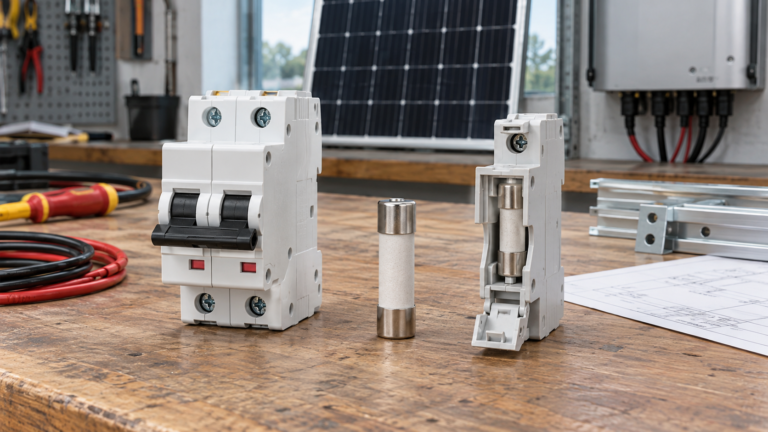
DC Fuse vs DC Circuit Breaker: Which Protection Method Fits the Circuit?
DC Fuse vs DC Circuit Breaker: Which Protection Method Fits the Circuit? Representative DC overcurrent protection components including…
Read guide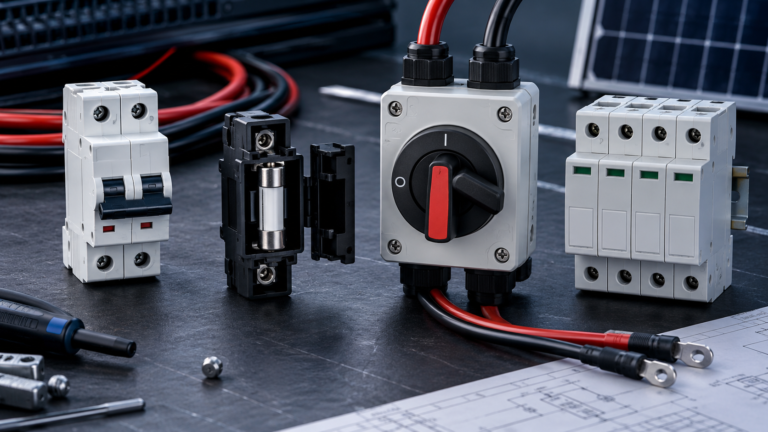
DC Protection Devices Selection Guide: Circuit Breakers, Fuses, SPDs and Isolators
DC Protection Devices Selection Guide: Circuit Breakers, Fuses, SPDs and Isolators Representative DC protection devices including circuit breakers,…
Read guide