
DC Power Protection · Selection Guide
DC Protection Devices Selection Guide: Circuit Breakers, Fuses, SPDs and Isolators
A DC electrical system may use several protection devices at the same time, but they do not all perform the same job.
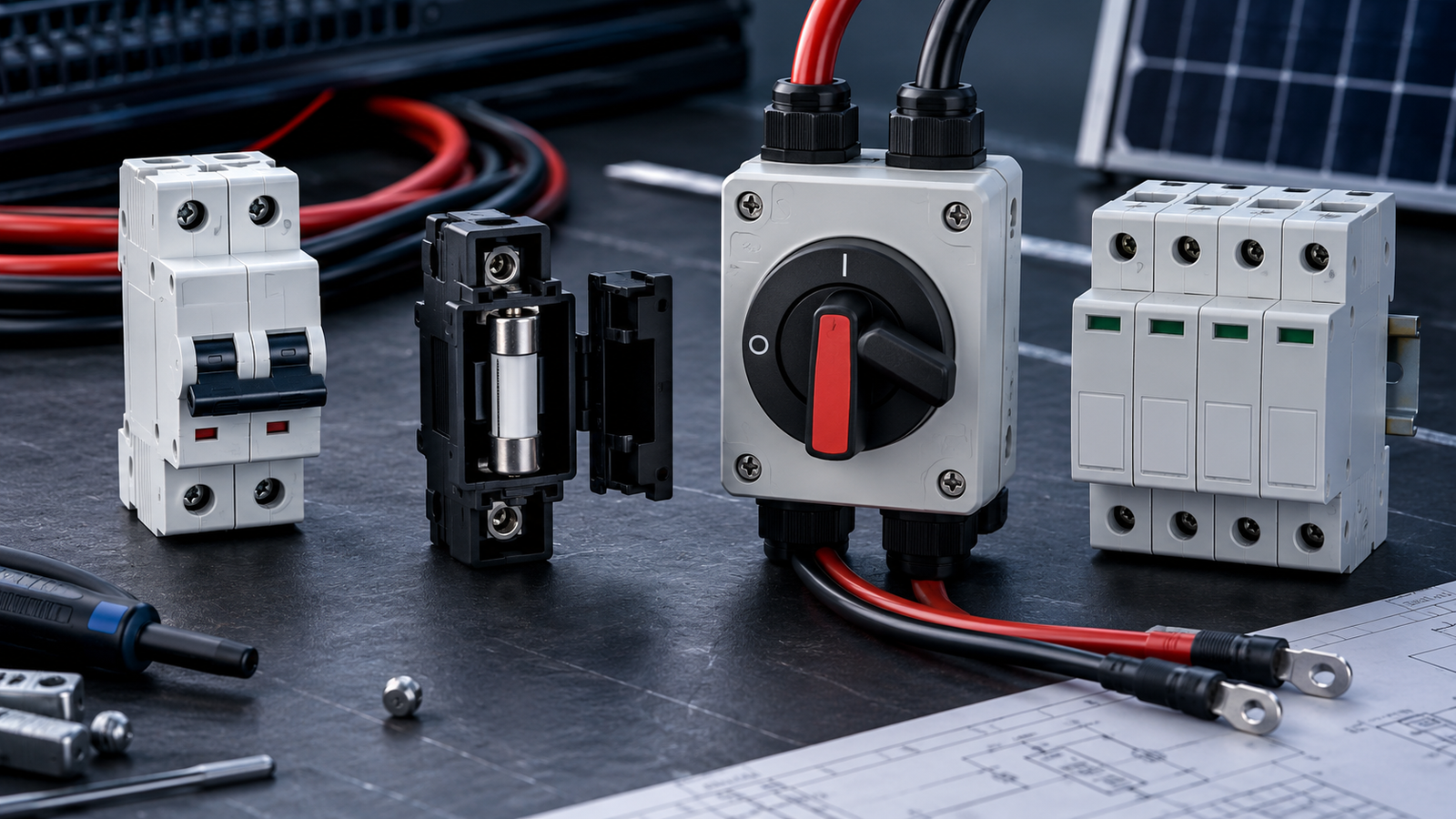
Circuit breakers and fuses primarily deal with overcurrent conditions. Isolators provide a way to disconnect equipment for operation or maintenance. Surge protective devices help limit transient overvoltage events.
Understanding these different functions is important when designing or sourcing protection for solar PV systems, battery systems, industrial DC circuits and other DC applications.
The key point is simple:
A circuit breaker, fuse, isolator and SPD are complementary devices—not interchangeable versions of the same product.
This selection guide helps buyers define the required protection function, compare the available device families within the DC Power Protection range, and verify the exact ratings, configuration and documentation before requesting a quote.
DC Protection Device Selection at a Glance
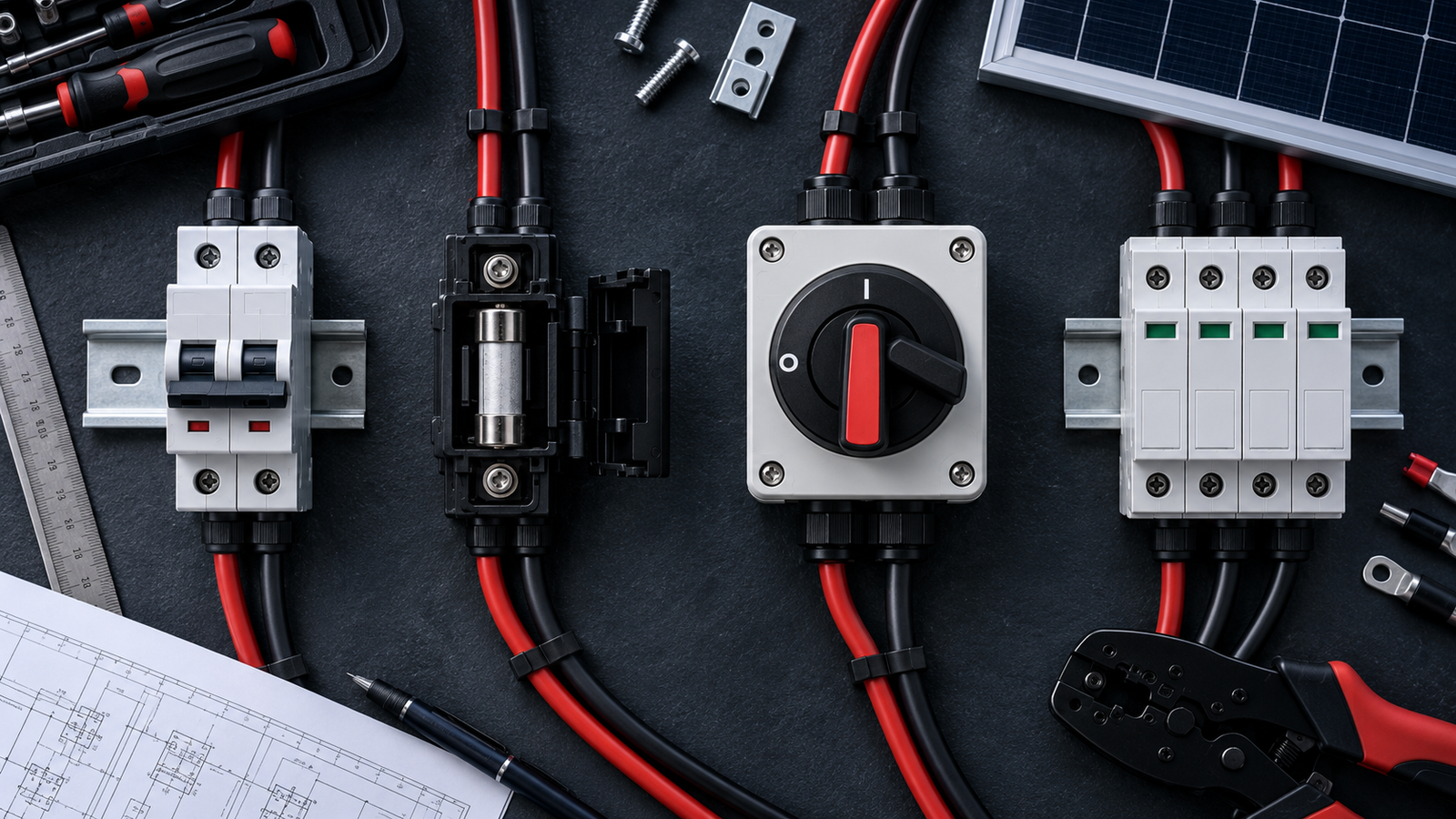
A useful way to understand DC protection is to separate the system into four functions.
| Device Family | Primary Selection Question | Published RITOKS Family | Key Data to Confirm |
|---|---|---|---|
| DC Circuit Breaker | Does the circuit require a resettable overcurrent-protection and switching device? | DC MCB and DC MCCB families | DC voltage, current, poles, breaking capacity, mounting and exact model |
| DC Fuse / Fuse Holder | Does the design use fuse-based overcurrent protection? | 10x38 mm and 10x65 mm gPV fuse links and holders | Fuse format, voltage, current, breaking capacity, holder compatibility and exact model |
| DC SPD | Is transient-overvoltage protection required by the project specification? | Published DC PV SPD families | System requirement, voltage, poles, published discharge-current data and exact documentation |
| PV DC Isolator | Does the PV DC system require a separate isolation or disconnect function? | Published PV DC isolator switch families | Voltage, current, poles, configuration, installation requirements and exact documentation |
These functions solve different electrical problems.
For example, installing an SPD does not remove the need for overcurrent protection. Likewise, an isolator should not automatically be treated as a replacement for a circuit breaker or fuse.
In many DC systems, several of these devices are used together.
1. Start With the Protection Function
Begin with the application and the protection function the circuit requires. Then compare the appropriate device family before checking model-specific electrical and installation data.
A practical verification path is: application → protection function → device family → system voltage and current requirements → device-specific ratings → installation and configuration → exact model documentation → RFQ.
This workflow organizes the information a buyer should confirm. It is not an automatic selection method, electrical calculation or wiring design.
2. DC Circuit Breakers
A DC circuit breaker is used to interrupt a DC circuit under specified operating and fault conditions.
Unlike a fuse, a circuit breaker can normally be reset after it trips, provided the cause of the fault has been identified and the equipment remains suitable for service.
DC circuit breakers are commonly available in different constructions, including:
- DC miniature circuit breakers (MCBs)
- DC molded case circuit breakers (MCCBs)
- Multi-pole DC breaker configurations
The correct type depends on the electrical requirements of the system rather than on product size alone.
When selecting a DC circuit breaker, buyers should verify factors such as:
- system DC voltage
- operating current
- required number of poles
- breaking capability
- trip characteristics
- installation format
- application requirements
It is especially important to use a breaker that is specifically suitable for the intended DC application. A device intended only for AC service should not be assumed to have the same switching capability on a DC circuit.
For available product families, see the RITOKS DC Circuit Breakers range.
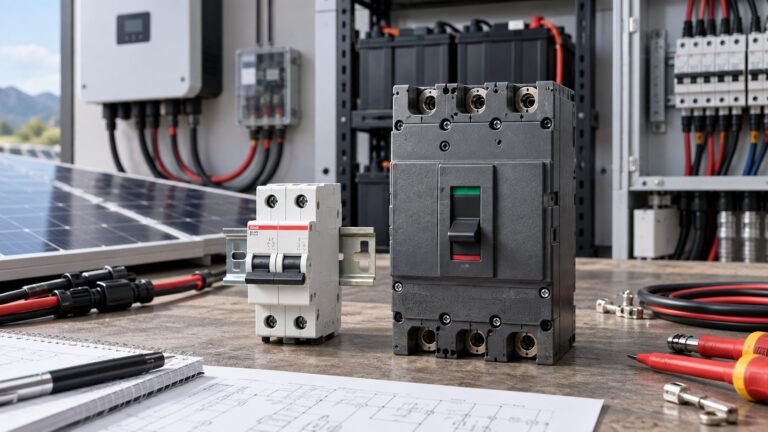
MCB or MCCB?
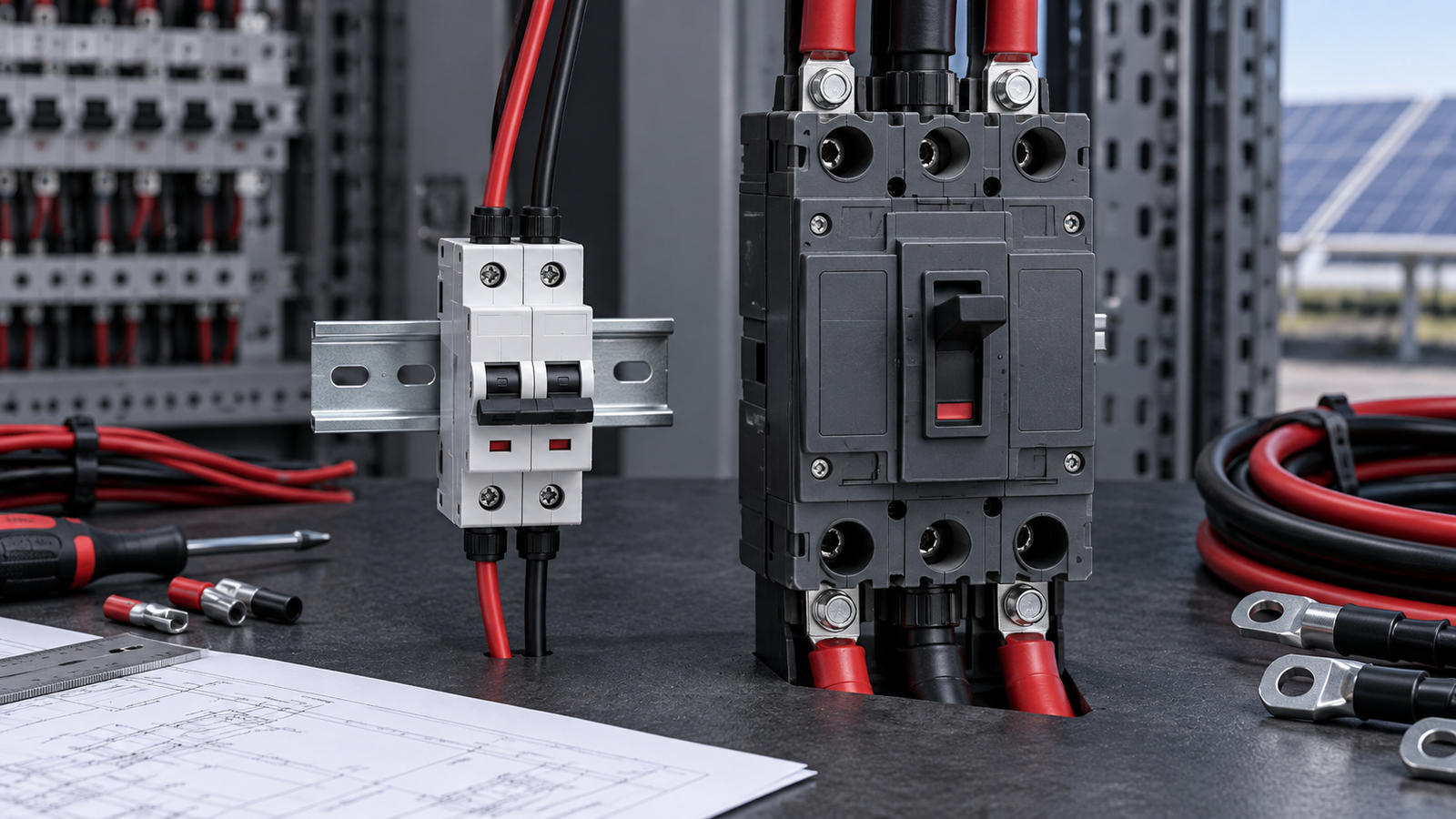
MCBs and MCCBs can both provide circuit protection, but they are designed around different construction, installation and protection requirements.
An MCB may be suitable for compact DIN-rail applications, while an MCCB may be preferred where the system requires a different current range, breaking capability, physical format or protection configuration.
There is no single current value that universally determines whether every DC application should use an MCB or MCCB.
We will cover that decision separately in:
How to Choose a DC Circuit Breaker: MCB vs MCCB
3. DC Fuses and Fuse Holders
A DC fuse protects a circuit by using a fuse element that opens when specified overcurrent conditions are reached.
Once a fuse operates, the fuse element must normally be replaced.
This gives the fuse a different operating and maintenance model from a resettable circuit breaker.
DC fuses are widely used in applications where dedicated fuse protection is part of the system design, including many photovoltaic and industrial DC installations.
A fuse system may include:
- a fuse link
- a compatible fuse holder or fuse base
- wiring and terminals suitable for the circuit
- associated disconnecting or protection equipment
When sourcing a DC fuse, the fuse itself should not be considered in isolation. The fuse and holder need to be suitable for each other and for the intended DC circuit.
Selection should be based on confirmed product data and the electrical requirements of the application. Review the current DC Fuses & Fuse Holders families for available options.
DC Fuse vs DC Circuit Breaker
Both devices can provide overcurrent protection, but they work differently.
A fuse uses a replaceable element.
A circuit breaker provides a mechanical switching and protection mechanism that can normally be reset.
The better choice therefore depends on the circuit, required protection characteristics, maintenance strategy, installation format and other system requirements.
Neither one should be treated as universally better.
For a detailed comparison, see:
DC Fuse vs DC Circuit Breaker: Which Should You Use?
4. DC Surge Protective Devices
A DC surge protective device (SPD) is designed to help protect electrical equipment from transient overvoltage events.
These short-duration voltage disturbances can originate from external or internal electrical events and may expose downstream equipment to voltage levels beyond normal operating conditions.
An SPD serves a different purpose from a fuse or circuit breaker.
A useful distinction is:
- Circuit breaker / fuse → overcurrent protection
- SPD → transient overvoltage protection
Therefore, adding an SPD does not mean other circuit protection devices are no longer required.
The appropriate SPD configuration depends on the application and the protection design of the complete system. Device-specific parameters, coordination requirements and certification claims should always be verified against the documentation for the actual product being selected.
RITOKS provides a dedicated DC Surge Protective Devices category. The published range includes the RTS-SPD40-PV family and the RTS-SPD60-1000-2P family.
These pages support initial comparison of published configurations only. Confirm the exact SPD classification, voltage-protection data, installation requirements, remote-contact details where applicable, and supporting technical documentation before selection.
5. PV DC Isolator Switches
A DC isolator, sometimes called a DC disconnect switch, is primarily used to provide electrical isolation.
Its purpose is different from overcurrent protection.
When equipment needs to be serviced, inspected or disconnected from part of a DC system, an appropriate isolating device can provide a defined means of separation.
This is particularly relevant in systems where installers or maintenance personnel need to isolate sections of equipment.
A DC isolator therefore should not automatically be treated as a substitute for:
- a circuit breaker
- a fuse
- an SPD
The actual switching capability and permitted operating conditions depend on the specific isolator design.
For this reason, selection should always be based on the confirmed ratings and application information for the exact model being used.
Review the PV DC Isolator Switches category and the published enclosed 4P and 2P/4P panel-mount families as initial sourcing references. Exact switching capability, wiring, utilization category, enclosure scope and supporting documentation must be confirmed for the selected model.
6. How These Device Families Work Together
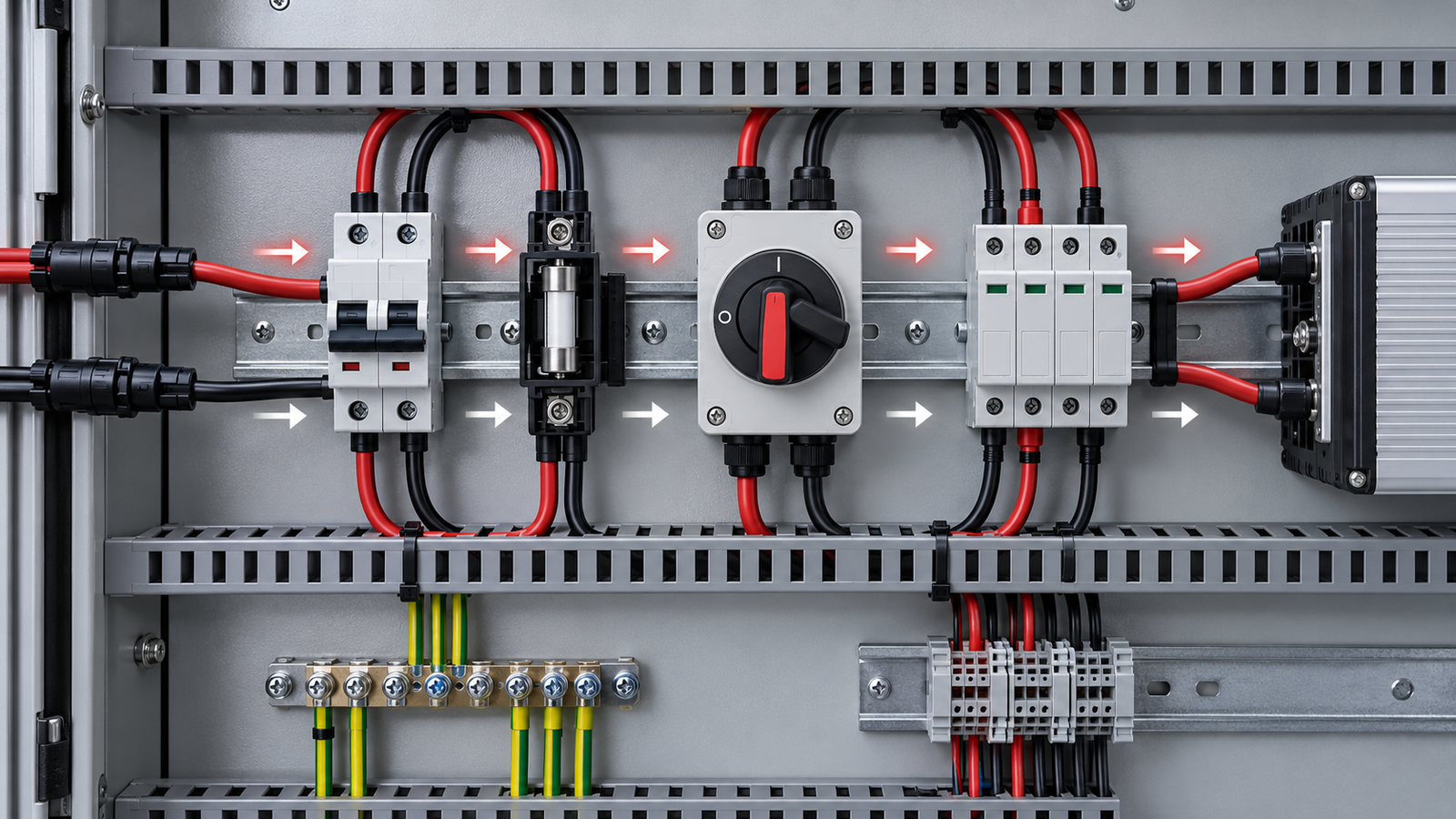
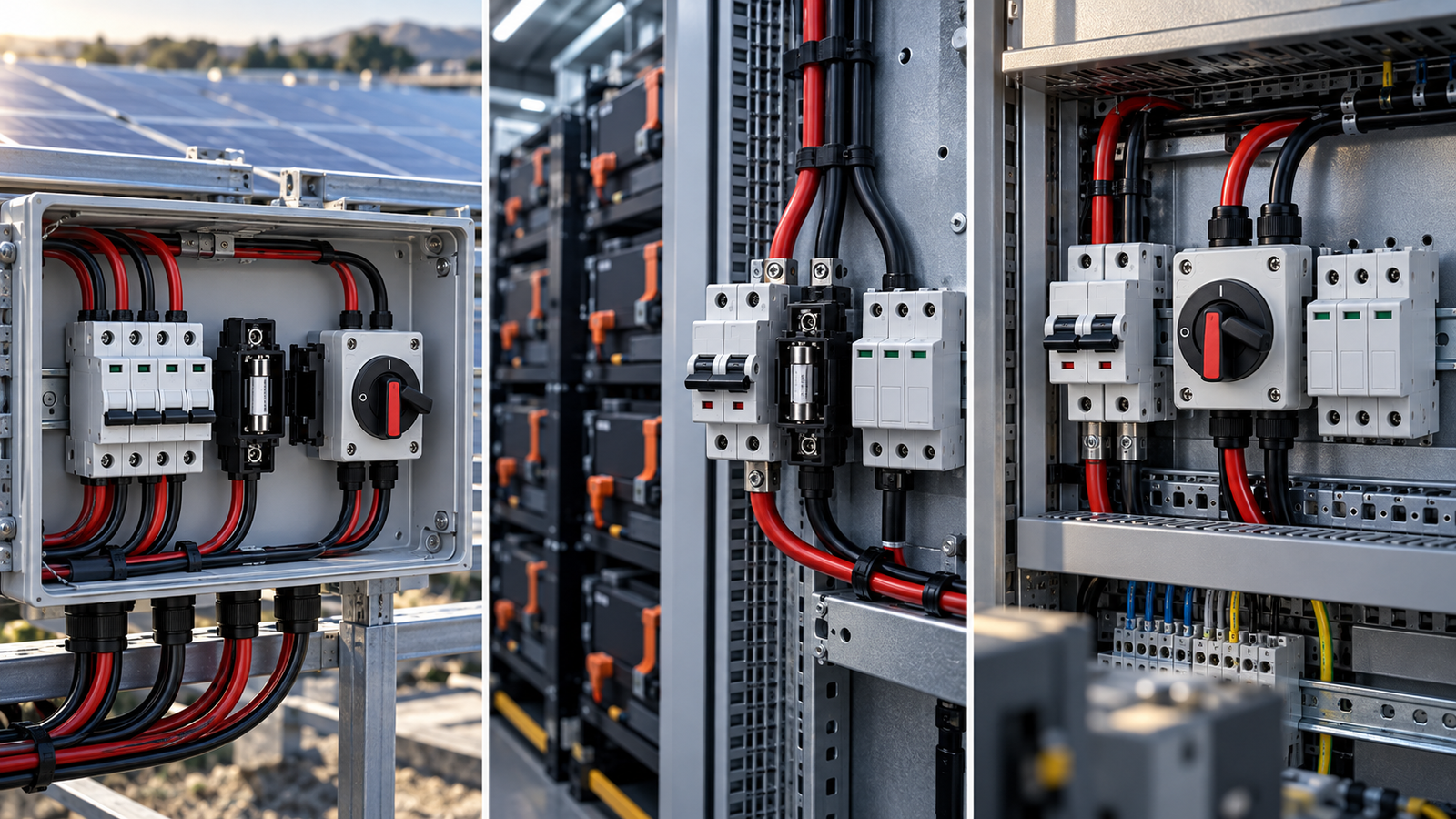
Consider a simplified DC system:
This is only a functional illustration. Actual device position and protection coordination depend on the electrical system and applicable design requirements.
The important concept is that each device addresses a different risk.
Rather than asking:
Which single device protects everything?
a better question is:
Which protection functions does this DC circuit require?
That question leads to a more reliable component-selection process.
7. Exact-Model Verification Checklist
Before selecting an exact product, define the electrical and application requirements of the circuit and verify each required field against the documentation for the selected model.
1. Confirm the DC System Voltage
Protection and switching equipment must be suitable for the actual DC system voltage.
Do not select a device solely because its current rating appears suitable.
2. Determine the Expected Operating Current
Establish the normal current conditions of the circuit and the protection requirements for the equipment and conductors.
This helps narrow the selection of breakers, fuses and associated components.
3. Define the Required Overcurrent Protection
Decide whether the circuit design requires:
- a fuse
- a circuit breaker
- or a protection architecture using multiple devices
The decision should reflect the system design rather than relying only on the nominal current value.
4. Determine Whether Manual Isolation Is Required
Ask whether part of the system needs to be physically disconnected for:
- maintenance
- servicing
- inspection
- equipment replacement
- operational isolation
If so, an appropriate DC isolator or disconnecting device may be required.
5. Evaluate Surge Protection Requirements
If transient overvoltage protection is required, select an SPD appropriate for the actual DC system and protection design.
An SPD should be treated as part of the wider protection architecture, not as a replacement for overcurrent protection.
6. Check the Exact Product Documentation
Before purchasing or installing any protection device, verify the specifications of the exact model.
Important characteristics vary by product family and model, so buyers should avoid assuming that specifications from one device apply to another.
Common DC Protection Selection Mistakes
Treating Every Protection Device as Interchangeable
A breaker, fuse, isolator and SPD solve different problems.
Replacing one function with another without checking the circuit requirements can leave part of the system unprotected.
Selecting by Current Rating Alone
Current is important, but it is not the only selection factor.
DC voltage, breaking capability, poles, installation format and device function can also affect the decision.
Assuming an AC Device Is Automatically Suitable for DC
DC interruption presents different switching conditions.
Always confirm that the exact product is rated for the intended DC application.
Treating an Isolator as Automatic Overcurrent Protection
The primary purpose of an isolator is isolation.
Do not assume it provides the same protection function as a fuse or circuit breaker unless the specific product documentation explicitly establishes that function.
Treating an SPD as Overload Protection
An SPD addresses transient overvoltage.
It is not a substitute for the overcurrent protection provided by an appropriate fuse or circuit breaker.
Published RITOKS DC Protection Families
A well-planned DC protection system begins with functions rather than individual products.
Start by asking:
- What needs overcurrent protection?
- What needs surge protection?
- What must be manually isolated?
- What are the system voltage and operating conditions?
- Which product ratings are confirmed for the exact application?
From there, breakers, fuses, SPDs and isolators can be selected as complementary components.
RITOKS currently publishes DC circuit breakers, gPV fuse links and fuse holders, DC photovoltaic surge protective devices and PV DC isolator switches. The expanded range also includes battery disconnect switches such as the SFCBS-300 family, PV combiner boxes such as the LQX-N family, and solar fuse links such as the MGPV family. These remain distinct device families with different isolation, combining and protection functions.
For project sourcing, buyers can provide the application, DC system voltage, operating current and required device type so that suitable available models can be identified from confirmed product data.
Information to Include in a DC Protection Inquiry
For model verification and quotation, provide the information already defined for the project:
- application and required protection function
- DC system voltage and required current or device rating
- required device family: breaker, fuse system, SPD or PV DC isolator
- pole, fuse-format or other configuration requirement
- mounting and installation constraints
- exact model or candidate family
- required technical documentation
- quantity and destination country
For an SPD inquiry, also provide the project’s surge-protection requirement or exact specification. RITOKS should verify the available published configuration and model documentation rather than infer an SPD rating or coordination design.
Frequently Asked Questions
Is a DC Isolator the Same as a DC Circuit Breaker?
No. Their primary functions are different. A circuit breaker provides circuit protection and interruption according to its design, while an isolator is primarily intended to provide electrical isolation. Always verify the capabilities of the specific device.
Can an SPD Replace a Fuse or Circuit Breaker?
No. An SPD is intended for transient overvoltage protection. Fuses and circuit breakers perform overcurrent-protection functions.
Is a Fuse Better Than a Circuit Breaker for DC Applications?
Not universally. The correct choice depends on the circuit design, protection requirements, installation method and maintenance requirements.
Can I Use an AC Circuit Breaker in a DC Circuit?
Only use a device when its manufacturer specifies that the exact product and configuration are suitable for the required DC application. Do not assume an AC rating automatically applies to DC operation.
Do All DC Systems Need All Four Types of Protection Device?
Not necessarily. The required protection architecture depends on the actual system. Circuit design and applicable requirements should determine which functions are needed.
Related Resources
Continue the DC protection research
How to Choose a DC Circuit Breaker: MCB vs MCCB
How to Choose a DC Circuit Breaker: MCB vs MCCB Representative DC MCB and MCCB formats used when…
Read guide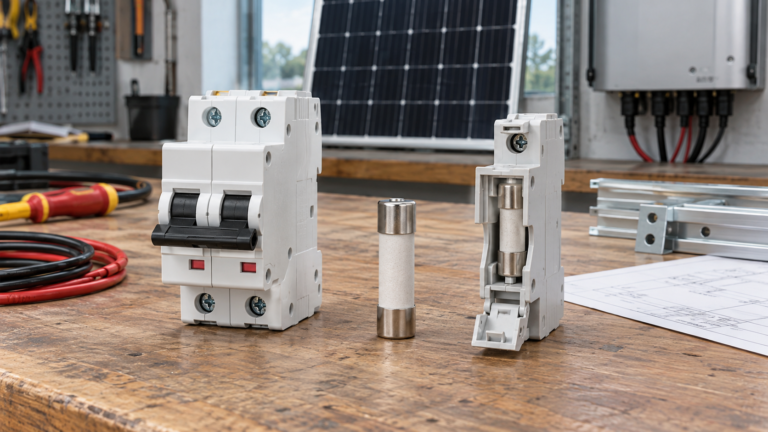
DC Fuse vs DC Circuit Breaker: Which Protection Method Fits the Circuit?
DC Fuse vs DC Circuit Breaker: Which Protection Method Fits the Circuit? Representative DC overcurrent protection components including…
Read guideNeed Help Selecting DC Protection Components?
RITOKS supplies DC protection components for OEM, panel-building and industrial sourcing requirements.
If you are selecting components for a project, send us your required DC voltage, operating current, application and preferred protection device type.
We can then match the inquiry against available RITOKS product families and confirmed model information.