
Electrical Measurement & Monitoring · Selection Guide
DIN Rail Energy Meter Selection Guide: Phase, Current, Communication and Model Verification
Selecting a DIN rail energy meter starts with the electrical and monitoring requirements, not with a current marking or display appearance alone. Buyers should define the phase and wire requirement, DIN rail format, voltage, current designation, measurement functions, communication needs and documentation required for the exact configuration.
This DIN rail energy meter selection guide provides a verification process rather than an automatic sizing or wiring method. Published current designations remain supplier-listed model fields; they do not establish direct connection, external current-transformer use, overload capability or a universal selection rule.
DIN Rail Energy Meter Selection at a Glance
A disciplined specification separates system requirements from product evidence. The Schneider Electric PowerLogic energy and power meter catalogue and the ABB DIN-rail energy-meter portfolio illustrate the breadth of fields that may vary between meter families. The Modbus Organization specifications distinguish the application protocol from the serial physical interface used to carry it. These sources support general terminology only; their specifications, connection methods and certifications are not RITOKS product data.
DIN Rail Energy Meter Selection Inputs
| Selection input | What to define, confirm or verify |
|---|---|
| Phase | Define the required single-phase or three-phase metering category. |
| Wire system | Confirm the project requirement against the exact model wording. |
| DIN rail / pole format | Verify the published format without assuming physical width or wiring. |
| Voltage | Confirm the required voltage and exact configuration-specific publication. |
| Current designation | Verify the supplier-published designation for the exact configuration. |
| Measurement functions | Define which energy and electrical parameters are required. |
| Display | Confirm display type, backlight and local functions where required. |
| Operating supply | Verify it separately from measured voltage. |
| Connection mode | Request the exact input and connection method. |
| CT requirement | Confirm whether an external CT or another input arrangement is required. |
| Accuracy | Define the requirement and verify the exact published field. |
| Communication interface | Confirm whether an interface such as RS485 is required. |
| Communication protocol | Verify the named protocol for the exact configuration. |
| Remote disconnect | Confirm whether the feature is required and published. |
| Pulse output | State the requirement and request exact-model confirmation. |
| Dimensions | Request exact overall, mounting and clearance information. |
| Wiring / documentation | Request exact wiring and supporting documents. |
| Exact model | Confirm the complete orderable configuration. |
1. Confirm Single-Phase or Three-Phase Requirements
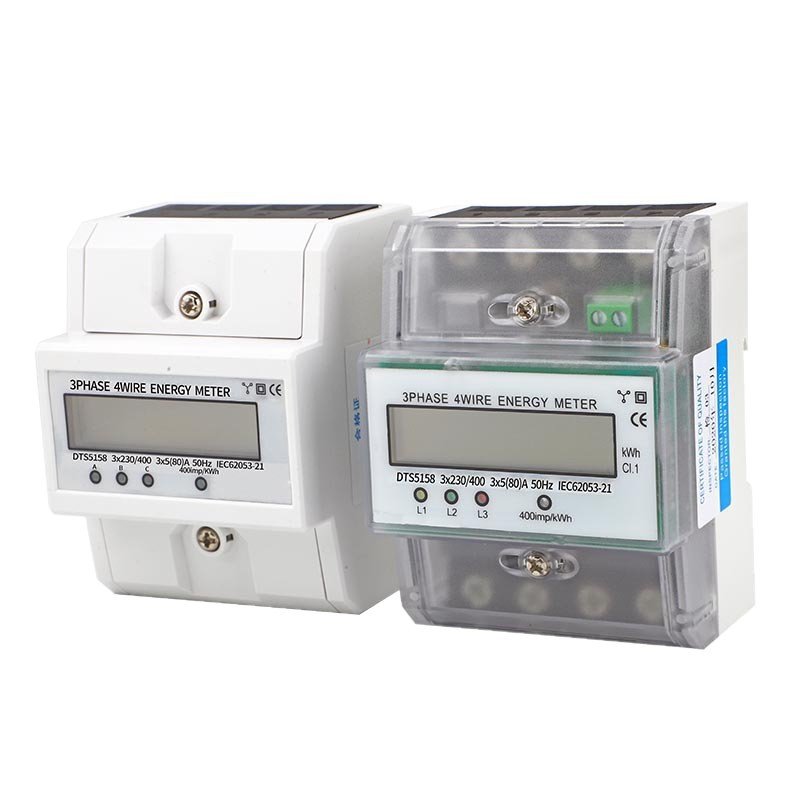
First define whether the project requires a single-phase or three-phase meter. This is a system requirement, not a residential, commercial or industrial ranking. RITOKS Products 441 and 445 are published as single-phase families. Product 443 is published as a three-phase four-wire family.
The phase category alone does not establish voltage, terminal sequence, connection mode or application suitability. Record the project phase and wire requirement, then verify the exact product wording and documentation.
2. Check DIN Rail Format and Pole Configuration
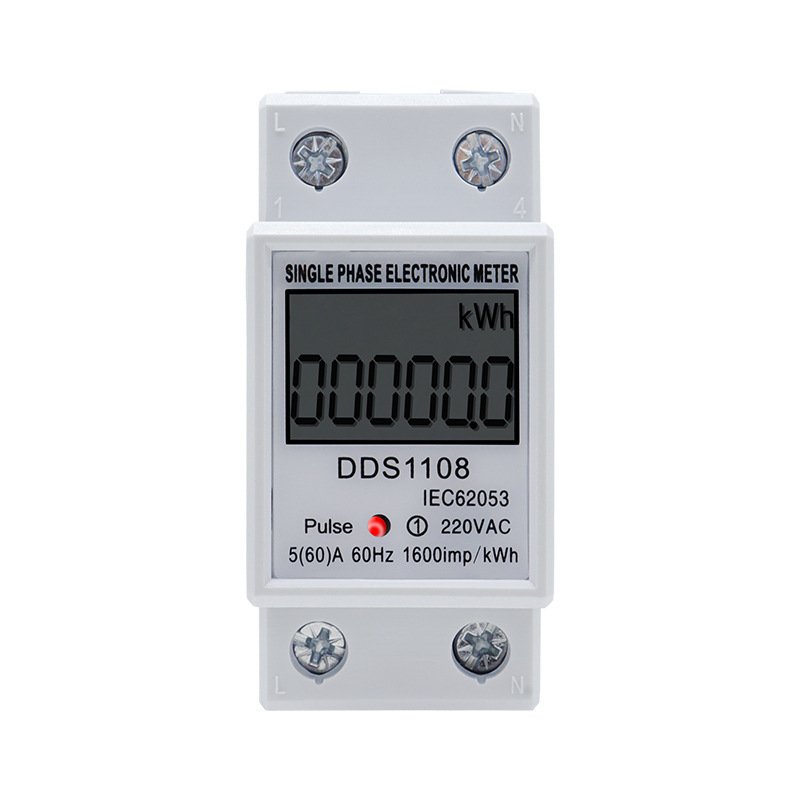
DIN rail mounting is confirmed across the three current RITOKS families, but their format details are not identical. Product 443 is described as 4P DIN rail, while Product 445 is described as 2P DIN rail. Product 441 publishes DIN rail installation without a pole or module count.
Treat pole or module format as a physical field to confirm. A 2P or 4P label is not an exact millimetre width, terminal map, conductor assignment or complete wiring architecture. Request an exact dimensional drawing where enclosure space matters.
3. Verify Voltage and Current Designations
Voltage evidence must remain configuration-specific. Within Product 441, 110V/127V is published only for the TYS1160 single-display 5(60)A row. Product 443 does not publish a voltage. Product 445 lists 220V as Voltage, but this must not be reinterpreted as auxiliary supply or proof of self-powered operation.
Product 441 includes mapped 5(60)A and 5(80)A configurations plus a supplier-listed 60A economy version. Product 443 maps 5–80A, 30(100)A and 30–100A to specific white or transparent housing rows. Product 445 maps 5(80)A, supplier-listed 5–80A and supplier-listed 80A-class wording to specific communication configurations.
These designations are not sizing instructions. They do not prove direct connection, CT connection, continuous-load suitability or an overload curve. Define the project requirement and verify the exact row and connection method.
4. Confirm Measurement and Display Functions
Product 441 publishes LCD single-display and multifunction-display configurations. Backlight is available only on mapped rows, and reset/clear is limited to the two listed 5(60)A rows that explicitly include it. The TYS1160 row is without backlight, while the economy row is described only as an economy energy-display version.
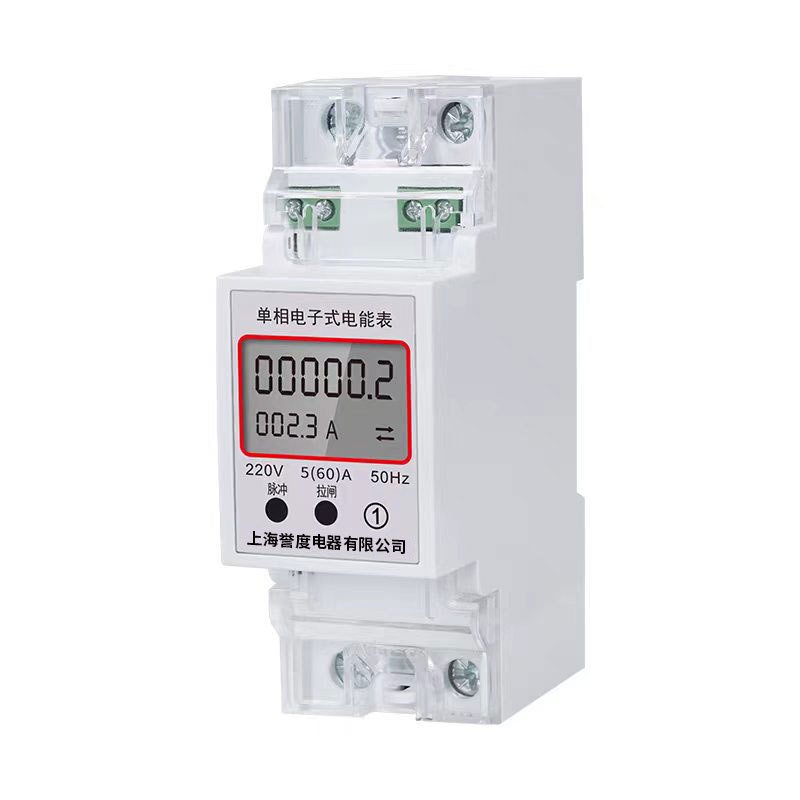
Product 443 publishes an LCD and white or transparent housing options, but not a detailed parameter list. Product 445 publishes energy, current, voltage and power display functions, parameter setting and power-off memory. Its display type is not published, so LCD must not be inferred from its image.
Words such as energy, power or multifunction should not be expanded into active or reactive energy, import/export, bidirectional metering, tariff, demand, harmonics or power-quality functions without exact evidence.
5. Verify Connection and Input Requirements
The current pages for Products 441, 443 and 445 do not publish whether each configuration is directly connected, requires an external CT or uses another input arrangement. They also do not publish CT secondary inputs or ratio settings. Current designations cannot fill this evidence gap.
Confirm the exact input and connection method before ordering or installation. State any known CT or input requirement in the inquiry, but do not assume compatibility, select a CT ratio or design the connection from this article.
Operating or auxiliary supply must be verified separately. A measured or published voltage is not automatically the meter supply. Request exact supply, input and wiring documentation where these fields affect the project.
6. Check Communication Interface and Protocol Separately
RS485 Interface
Communication is configuration-specific. Product 441 covers non-communication configurations, and Product 443 does not publish communication support. Product 445 presents all four current configurations as RS485 communication configurations. This does not mean every DIN rail energy meter has RS485.
RS485 identifies a serial interface; the application protocol is a separate specification. Integration requirements should state both the interface and named protocol, followed by a request for exact settings and documentation.
MODBUS-RTU and DL/T645-2007 as Exact-Configuration Examples
Product 445 includes separate RS485 configurations using either MODBUS-RTU or DL/T645-2007. The 2P MODBUS Communication and 2P MODBUS + Disconnect configurations publish MODBUS-RTU. The 2P645 Communication and 2P645 Disconnect configurations publish DL/T645-2007.
No dual-protocol configuration is published. Baud rate, parity, stop bits, address range, registers, function codes, data format, defaults and RS485 terminal mapping are also not published. Protocol evidence must not be transferred to Products 441 or 443.
7. Confirm Accuracy and Optional Functions
Accuracy is an exact-model field. Product 445 carries a supplier-stated Class 1 statement, while Products 441 and 443 do not publish accuracy. Class 1 must not become a billing-grade, revenue-grade, legal-metrology, certification or utility-approval claim.
Remote disconnect or switching is published only for the 2P645 Disconnect and 2P MODBUS + Disconnect configurations. Contact rating, switching current, control logic, interlocking and command details are not published. Pulse output is not published for any of these families and should only be listed as a requirement to confirm.
Published RITOKS DIN Rail Energy Meter Families
The DIN Rail Energy Meters category sits within Electrical Measurement & Monitoring. This overview supports requirement screening only; it is not a ranking or automatic recommendation.
Published RITOKS DIN Rail Energy Meter Family Overview
| Family | Phase | DIN rail format | Published voltage | Published current | Measurement / display | Communication | Protocol / accuracy | Key data to confirm |
|---|---|---|---|---|---|---|---|---|
| DDS1108 / TYS1160 | Single phase | DIN rail; pole count not published | 110V / 127V only on mapped TYS1160 row | Mapped 5(60)A, 5(80)A and supplier-listed 60A economy row | LCD; mapped display, backlight and reset/clear options | Non-communication configurations | Not published | Connection mode, supply, dimensions, wiring and documents |
| DTS5158B | Three-phase four-wire | 4P DIN rail | Not published | 5–80A, 30(100)A or 30–100A by exact housing row | LCD; white or transparent housing | Not published | Not published | Voltage, frequency, dimensions, connection, supply and documents |
| 2P645 / 2P MODBUS | Single phase | 2P DIN rail | 220V labelled as Voltage | Mapped 5(80)A, 5–80A and 80A-class configurations | Energy/current/voltage/power display functions; type not published | RS485 on four configurations | MODBUS-RTU or DL/T645-2007 by row; supplier-stated Class 1 | Protocol settings, connection, supply, dimensions, wiring and documents |
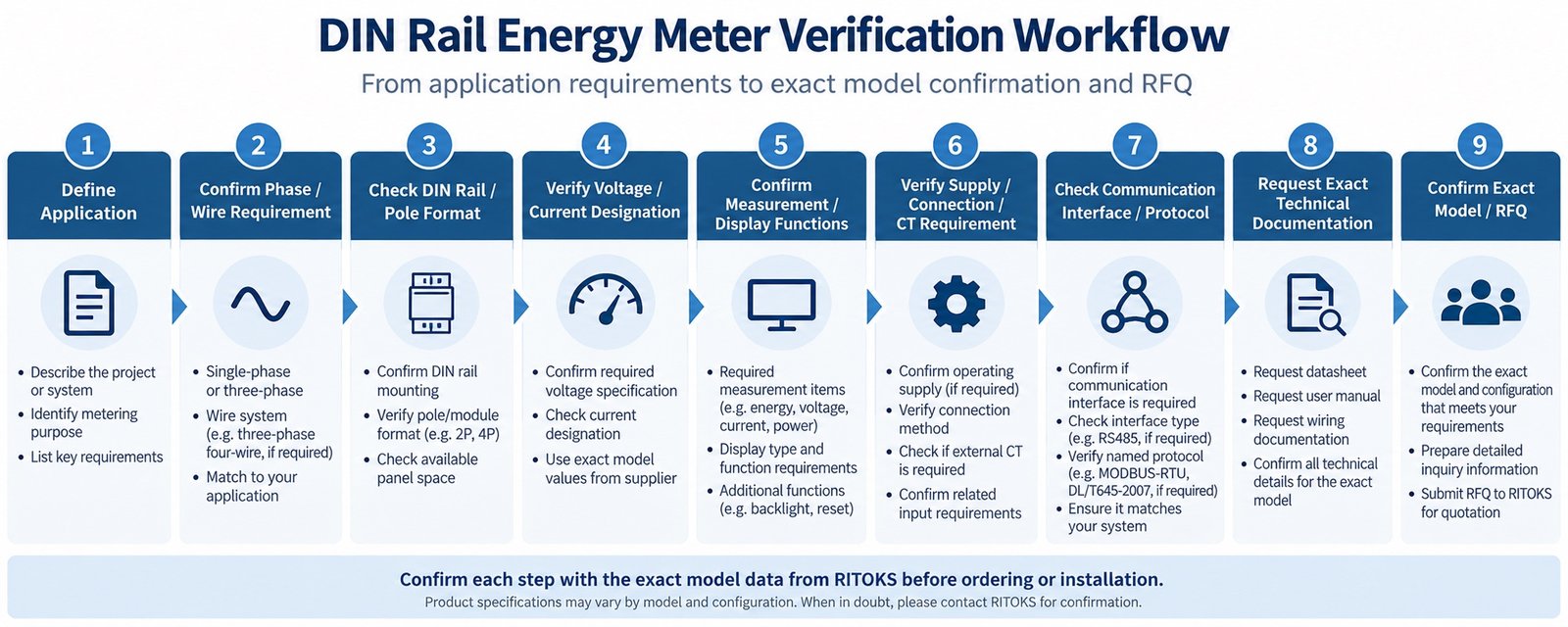
8. Exact-Model Verification Workflow
9. Information to Include in a DIN Rail Energy Meter Inquiry
- Application and monitoring purpose
- Single-phase or three-phase requirement
- Wire system, if known
- Required voltage and current designation or system information
- DIN rail and pole/module format
- Measurement and display functions
- Operating or auxiliary supply requirement
- Connection or input configuration, if known or to confirm
- External CT requirement, if applicable or to confirm
- Accuracy requirement, if applicable
- RS485 and named protocol requirements
- Remote disconnect or pulse-output requirement, if applicable
- Required wiring, dimensional, protocol and technical documents
- Quantity and destination
10. What Data Still Requires Exact-Model Confirmation?
Connection mode, direct or CT input status, CT ratio, operating supply, wiring and exact dimensions are not published across these three families. Pulse output is also not published. Frequency is published only as a 50/60 Hz test-frequency statement for Product 441, while detailed protocol settings are absent for Product 445.
Request the exact datasheet, wiring diagram, dimensional drawing and protocol documentation needed before installation. None of the current product pages provides a downloadable datasheet or certification evidence. Missing fields must not be filled from another RITOKS family, a third-party meter or a product image.
Frequently Asked Questions
What should I check before selecting a DIN rail energy meter?
Define the phase and wire requirement, DIN rail format, voltage, current designation, measurement functions, supply, connection method, accuracy, communication needs and exact documentation.
How do single-phase and three-phase DIN rail energy meters differ as selection categories?
They represent different project phase requirements. Products 441 and 445 are single phase, while Product 443 is three-phase four-wire. These labels do not establish suitability, voltage or wiring by themselves.
Can I select a DIN rail energy meter from current designation alone?
No. Phase, voltage, functions, physical format, input method, communication and documentation may also affect the required configuration.
Does RS485 mean a DIN rail meter supports Modbus?
No. RS485 is an interface. The named application protocol must be verified separately for the exact configuration.
Does Product 445 support MODBUS-RTU and DL/T645-2007 at the same time?
No simultaneous dual-protocol configuration is published. Product 445 has separate RS485 configurations using MODBUS-RTU or DL/T645-2007.
Are all RITOKS DIN rail energy meters direct connected?
The current pages do not publish a family-wide direct-connection status. Confirm the exact connection method before ordering or installation.
Does supplier-stated Class 1 mean billing grade?
No such conclusion is supported. Product 445 has a supplier-stated Class 1 statement, not evidence of billing, revenue-metering, legal-metrology or certification status.
What documentation should I request before installation?
Request the exact datasheet, wiring diagram, dimensional drawing, connection and supply information, and protocol documentation required for the selected configuration.
Confirm the Exact DIN Rail Energy Meter for Your Project
Send RITOKS your phase, current, mounting, measurement, connection, communication and documentation requirements for exact-model review.
Related Resources
Continue exploring Electrical Measurement & Monitoring
Digital Panel Meter Selection Guide: Function, Range, Panel Cutout and Model Verification
Selecting a digital panel meter begins with the measurement and installation requirements, not with the display appearance alone.…
Read guide
Current Transformer Selection Guide: Construction, Ratio, Output and Model Verification
Selecting a current transformer starts with the measurement requirement, not with a model number alone. Buyers should define…
Read guide